
He heard the music
without playing a note.
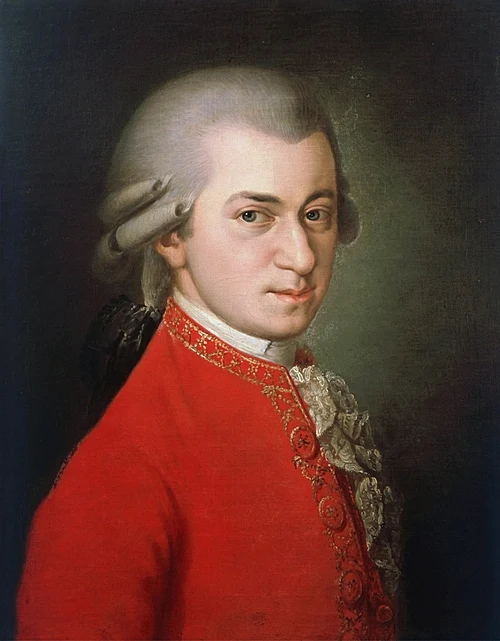
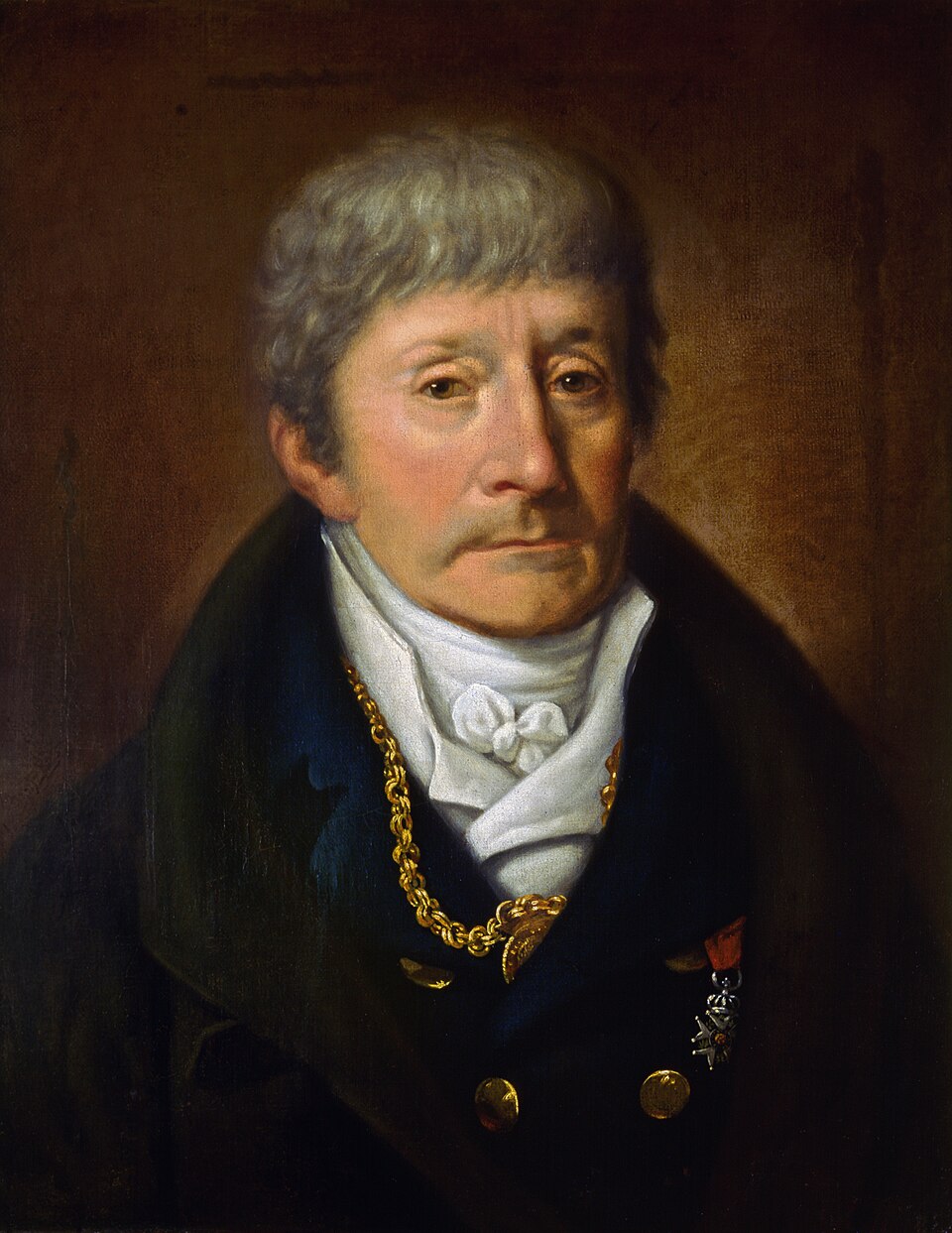
In the film, Salieri is the respected court composer and Mozart a struggling nobody. Mozart's wife slips a folder of her husband's manuscripts to Salieri, hoping the work will speak for itself. Salieri opens it and begins to read, and the music starts to sound. Not played. Not rehearsed. He is holding paper in a quiet room, and he hears an oboe hold a single note until a clarinet lifts it away and sweetens it. He is shaken to his core.
The plot, with Salieri as the jealous villain, is fiction. The real men were colleagues; Salieri later taught Mozart's son. But that scene endures because it shows something true. Whatever kind of composer Salieri was, he was musically literate. The notes on the page were not symbols to decode. They were sound.
The note should sound before the fingers move
When you read a word on a page, you hear it in your head. Nobody sounds out letters and then decides what mouth shape to make. Reading music should work the same way: the note on the staff makes the sound appear in the student's head, and the technique is simply how they let it out.
It runs the other way too. Hear a song and know what the notes are, what the harmony is doing, and play along. No searching the internet for the chords.
Music educators call this skill audiation, and it's the difference between decoding music and being fluent in it.
Where we stand. Full audiation is a lifetime skill, and no software delivers it. What Music Ace does is build the pieces it rests on: steady rhythm, secure pitch, fluent reading, and an ear trained to notice. That moves students in the right direction, and it is the goal we design against.
You know how rehearsal goes
You want to teach expression, phrasing, tone: how to make a violin sing. Instead, your time is spent clapping rhythms the students should already know, figuring out which one is playing F instead of F♯, stumbling through sight-reading one wrong note at a time, and explaining the key signature. Again.
Let Music Ace teach the rote skills, so you can teach actual music.
A beginner's mind is already full
A beginning violinist is required to do many complicated tasks all at once:
- the rhythm
- the right note
- in tune
- bow angle
- bow pressure
- posture
- holding the instrument
- …and musicality, somehow
That is too much for anyone. Something gives, and usually it's everything, a little.
So take the rhythm away from the instrument and work on it by itself. Every other problem disappears for a moment; the student's whole attention lands on one thing, until it's automatic. Do the same with note-reading. Now, back at the violin, the rhythm and the notes are no longer the obstacles, and there's finally room to think about technique and tone.
Now multiply that across your whole class.
Imagine every student arriving able to count the rhythm and read the notes. Rehearsal stops being correction and becomes interpretation, with everyone ready for the higher work at the same time.
One skill, six approaches
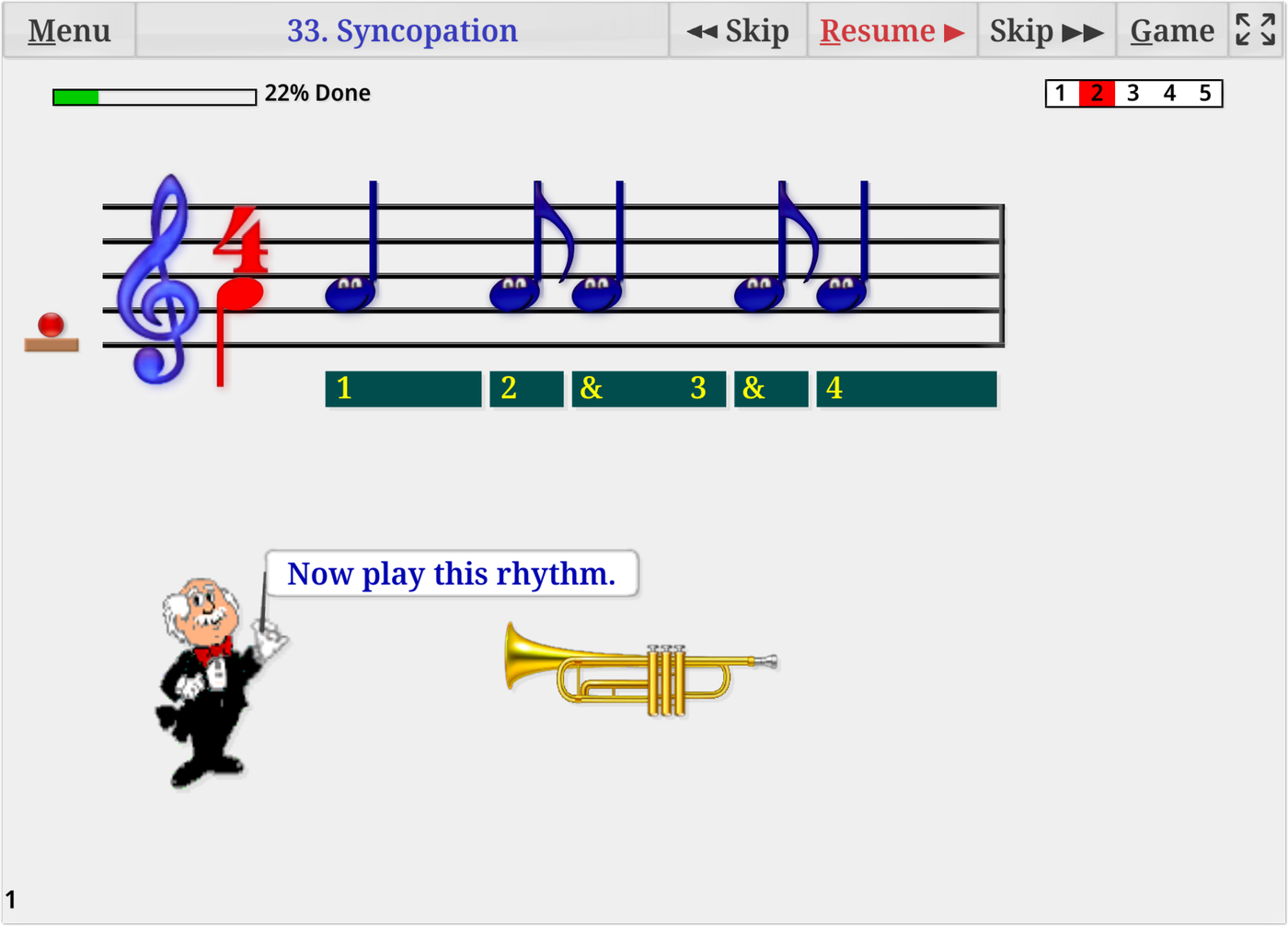
A new idea isn't explained once and tested. It's approached from six angles until the student understands it. Here's a rhythm lesson.
Hear the pattern, perform it back, before any notation appears. The feel comes first, by experience rather than explanation.
Only then is the notation shown. The symbol attaches to a sound the student already knows.
Multiple choice and dictation against near neighbours, because the differences are where the learning is.
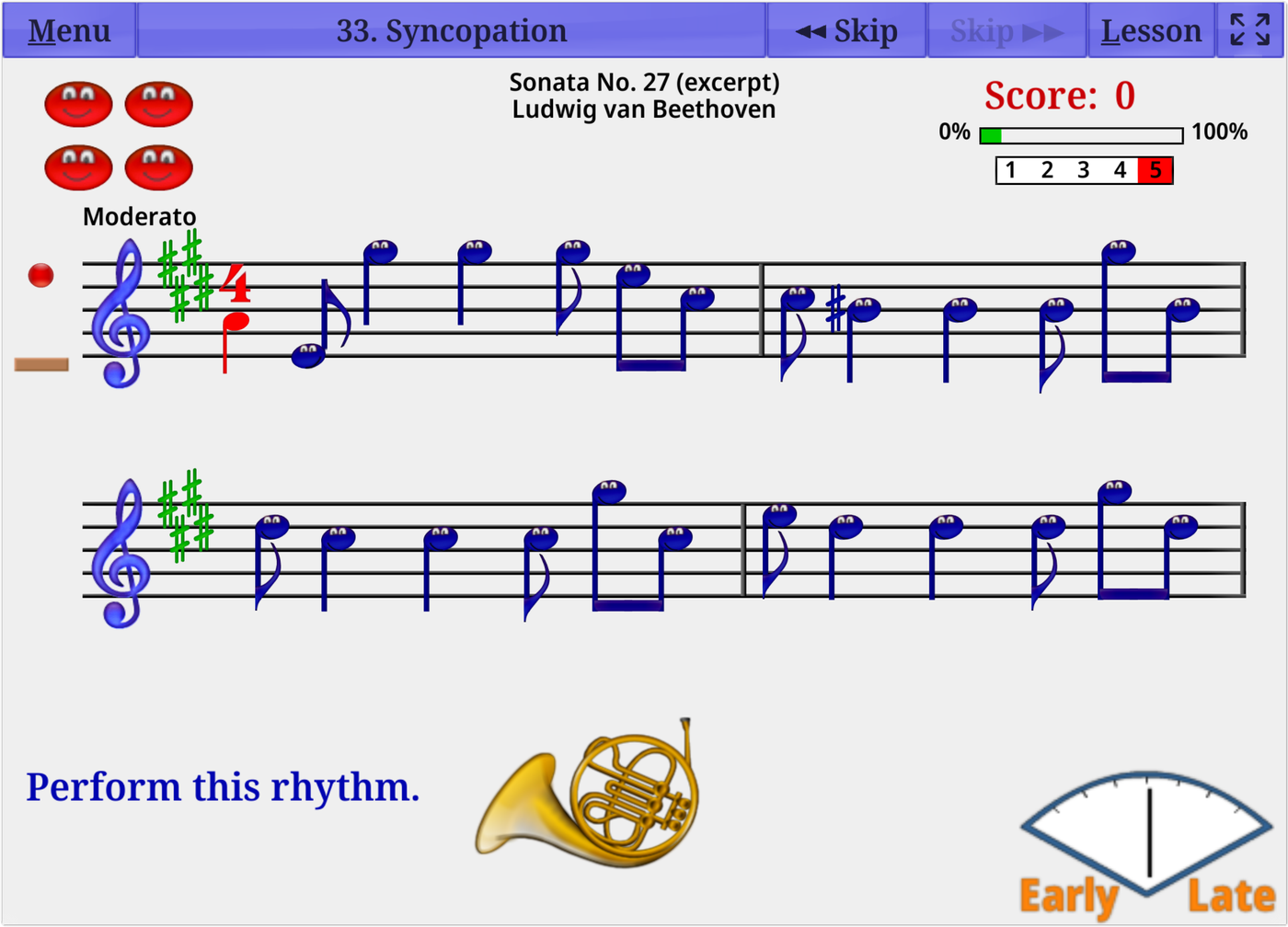
A longer passage in time, with the new pattern in context instead of isolation.
Write a short melody that uses the pattern. Nothing tests understanding like having to use it.
The same cycle again (echo, discriminate, perform, dictate) with points on the line. Replayable forever; the score climbs and the skill hardens.
Eye and ear together
We slip listening into activities that don't obviously need it. Identifying a note on the staff also asks the student to listen for the notes that match. Eye and ear are trained together, not separately.
And the sound is always asked for alongside the concept. After learning how a major scale differs from a minor one, students tell the two apart by ear. Then from only part of the scale. Then from less again, difficulty rising a step at a time, toward a student who doesn't work out what they're hearing. They simply know.
That's the road that leads, eventually, to Salieri in a quiet room, hearing an orchestra in a page of ink.
The keyboard is a map of music
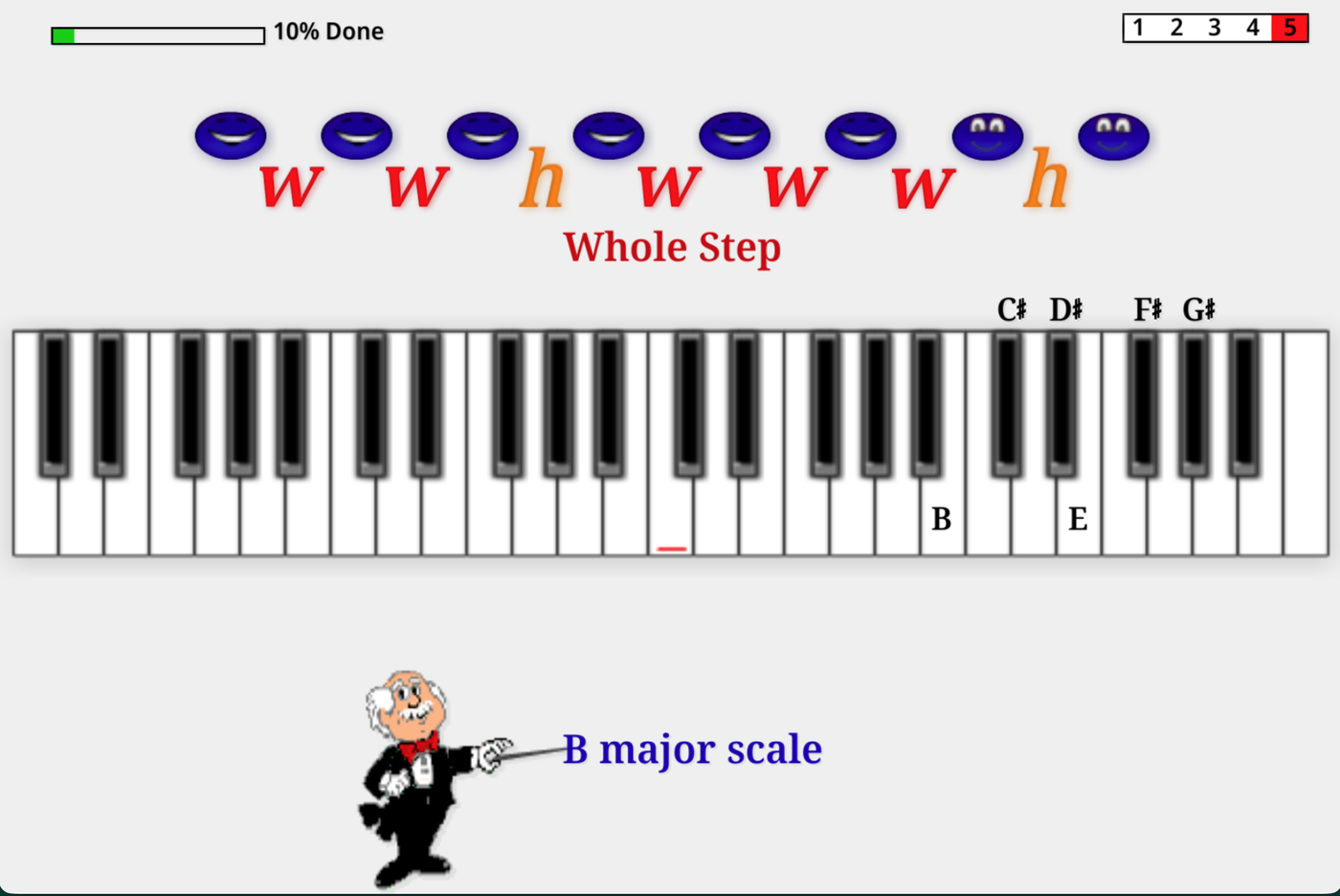
The piano keyboard turns up in many Music Ace lessons. Not because this is a piano course, but because nothing else shows how music is put together as clearly.
Octaves repeat in front of you. Sharps and flats are the black keys. Whole steps and half steps are neighbors you can count. Build a major scale and you can see the pattern; change one key and hear it turn minor.
Whatever instrument a student plays, the keyboard is where theory stops being a rule to memorize and becomes something to look at.
The goal of teaching music is to make musicians.
Try it with your students for 30 days, and listen to what rehearsal sounds like when nobody is stumbling through the basics.